There's a difference between books you read and books that read you.
I've spent most of my life accumulating both. The first kind lines your shelves and gives you something to talk about at dinner parties. The second kind does something more uncomfortable: it finds the locked rooms inside you, the ones you've carefully wallpapered over and convinced yourself are just storage, and it opens them. Sometimes gently. Sometimes with a crowbar.
This is a list of the crowbar ones.
Not ranked. Not curated for impressiveness. Some of these are literary fiction. One is planetary science fiction. One involves a very large dragon-riding academy and a frankly devastating amount of yearning. I will not be apologising for any of them.
What they have in common is this: I was a different person before I read them. I didn't always realise it at the time. But looking back, I can trace the fault lines.
Earth — David Brin
I've read Earth at least five times. Possibly six. I've lost count in the way you lose count of how many times you've watched a particular storm roll in over the ocean — it's not about the number, it's about what happens to your nervous system each time.
Brin wrote it in 1990 and it predicted the internet, climate collapse, the fragmentation of the public sphere, and about a dozen other things we're currently living through with varying degrees of horror. That alone should make it required reading. But the reason I keep going back isn't the prescience. It's the hope. Not naïve hope — Brin doesn't do naïve — but the kind of hard-won, eyes-open hope that looks directly at how catastrophically we've mismanaged this planet and says: and yet. And yet here we are, still thinking, still feeling, still trying to figure it out.
Every time I read it, I have at least one epiphany. Not the same epiphany. A new one. The book seems to contain more ideas than it's physically possible to hold in a single reading, so it just rotates them, offering you whichever one you're ready for. That's not a trick. That's genius.
The Name of the Wind — Patrick Rothfuss
This is the most perfect fantasy novel I've ever read. I'm aware that's a big claim. I'm sticking with it.
The prose is extraordinary — genuinely literary, the kind of thing where you pause mid-page because a sentence has done something you didn't know sentences could do. The character of Kvothe is one of the most compelling unreliable narrators in contemporary fiction. The magic system (Sympathy, for those of you who live here) is elegant and logical and genuinely surprising. The world feels lived-in without being exhausting.
It is, by every available metric, exactly what a fantasy novel should be. And Rothfuss has been writing Book Three for over a decade. I'm not going to say anything further about that. I'm going to take a deep breath and close that particular door and trust that it will be worth it.
(It had better be worth it.)
The Inspector Shan Series — Eliot Pattison
Someone once described these books to me as “crime fiction set in Tibet” and I nearly didn't read them because that description does them approximately zero justice.
Yes, there's a disgraced Chinese investigator. Yes, there are crimes. But what Pattison has actually written is something far stranger and richer: a meditation on what happens to the human spirit under occupation, told through the lens of Tibetan Buddhist theology, wrapped in the structure of a detective novel. The Bardo. The relationship between suffering and awakening. The ways in which institutional power destroys the sacred, and the ways in which the sacred somehow survives anyway.
I started the first book expecting procedural intrigue and ended up having what I can only describe as a philosophical crisis in the best possible way. The kind where you put the book down and sit very quietly for a while because you're not entirely sure who you are now.
Zodiac Academy — Caroline Peckham & Susanne Valenti
Look. I know what this is.
It's chaos magic wrapped in astrology wrapped in extremely attractive fae boys doing increasingly inadvisable things. The Vega twins are a mess. The Heirs are worse. The entire situation is one long delicious slow-burn catastrophe, and every single chapter ends with something happening that makes you absolutely furious in the best way and you read the next one immediately at eleven-thirty at night when you were supposed to be asleep.
I'm not embarrassed. Some books break you open through philosophy and some do it through pure, uncut fun and the frank acknowledgment that yearning is a legitimate human experience that deserves to take up space on the page.
Zodiac Academy gave me permission to write the way I actually want to write — all the longing and the crackling tension and the enemies who are clearly going to end up together and the emotional stakes that feel bigger than logic can explain. I'd been apologising for that instinct. These books told me to stop. I did.
A Tongue So Sweet and Deadly — Sophie St Germain
I'm not entirely sure I'm over this one. I read it. I cried. Not politely — not the dignified single tear rolling down a cheekbone situation. The ugly kind. The kind where you have to put the book face-down and just… sit with it for a while and wonder what exactly has happened to you and whether you need a cup of tea or a therapist or both.
There may have been a mini breakdown. I'm not ruling it out.
This is the highest praise I can give a book. If it can take something that lives inside you — something you thought was safely filed away under I've processed this — and pull it out into the light and make you feel it again, new and raw and real, then it's done its job. Fair warning: this book will emotionally ambush you. Go in with snacks and a plan.
Michael Dransfield
I came to Dransfield the way you come to most Australian poets: sideways, late, through someone else's grief.
He died at twenty-four. He spent most of his short life writing poems that felt like transmissions from a frequency no one else could quite tune into — raw and strange and achingly alive. Study in Restlessness is ostensibly about being bored of poetry, and it manages to be more alive than almost any other poem about poetry I've ever read. Sea contains the line you eat ships, which is just three words and somehow contains multitudes. And Ground Zero:
wake up
look around
memorise what you see
it may be gone tomorrow
everything changes. Someday
there will be nothing but what is remembered
there may be no-one to remember it.
Keep moving
wherever you stand is ground zero
a moving target is harder to hit
I think about that last line more often than I can account for. Wherever you stand is ground zero. There's something in it that refuses to settle — a kind of urgent, gorgeous impermanence that hits differently when you're trying to write something you hope will last. Dransfield knew the world was burning. He wrote poems anyway. That feels important.
Wide Sargasso Sea — Jean Rhys
I read Jane Eyre first, like a good girl. And I loved it, like a good girl. And then I read Wide Sargasso Sea and realised I'd been reading the wrong book the whole time.
What Rhys did — taking the madwoman in the attic and giving her a name, a history, a self — is one of the most radical acts in the English literary canon. Not because it tears down Jane Eyre (it doesn't, really), but because it refuses to accept that some stories are born as background. It insists that Bertha Mason — Antoinette Cosway — is not a plot device in someone else's narrative. She is the narrative.
Every time I create a character who is supposed to be secondary, I now hear Rhys in the back of my head: and what does she see from where she stands?
Outlander — Diana Gabaldon
I will accept no criticism of Jamie Fraser. Not today, not ever.
But more than Jamie (and he is, to be clear, a literary achievement) — Gabaldon built a world where the stones are alive, where time is porous, where love is violent and tender and absolutely indifferent to the laws of physics. She made the past feel urgent and the present feel ancient.
I've been to Avebury. I stood in the circle and put my hands on one of those stones — those great silent megalithic presences — and I thought: something happened here. That feeling is what Outlander lives in permanently. And it's what sent me down a rabbit hole that is now a YA novel set in Avebury, following a girl who goes back to the building of the stones themselves.
The Stars My Destination and Lord of Light — Alfred Bester and Roger Zelazny
These two don't belong in the same conversation except that they absolutely do. Both are science fiction in the way that Picasso is painting — technically correct but doing something so wild with the form that the genre almost doesn't contain them.
Both of them do the thing I love most in science fiction, which is use an utterly alien landscape to talk about the most human things imaginable — rage, transcendence, the cost of power, the difference between a god and a tyrant. If you haven't read them: clear a weekend.
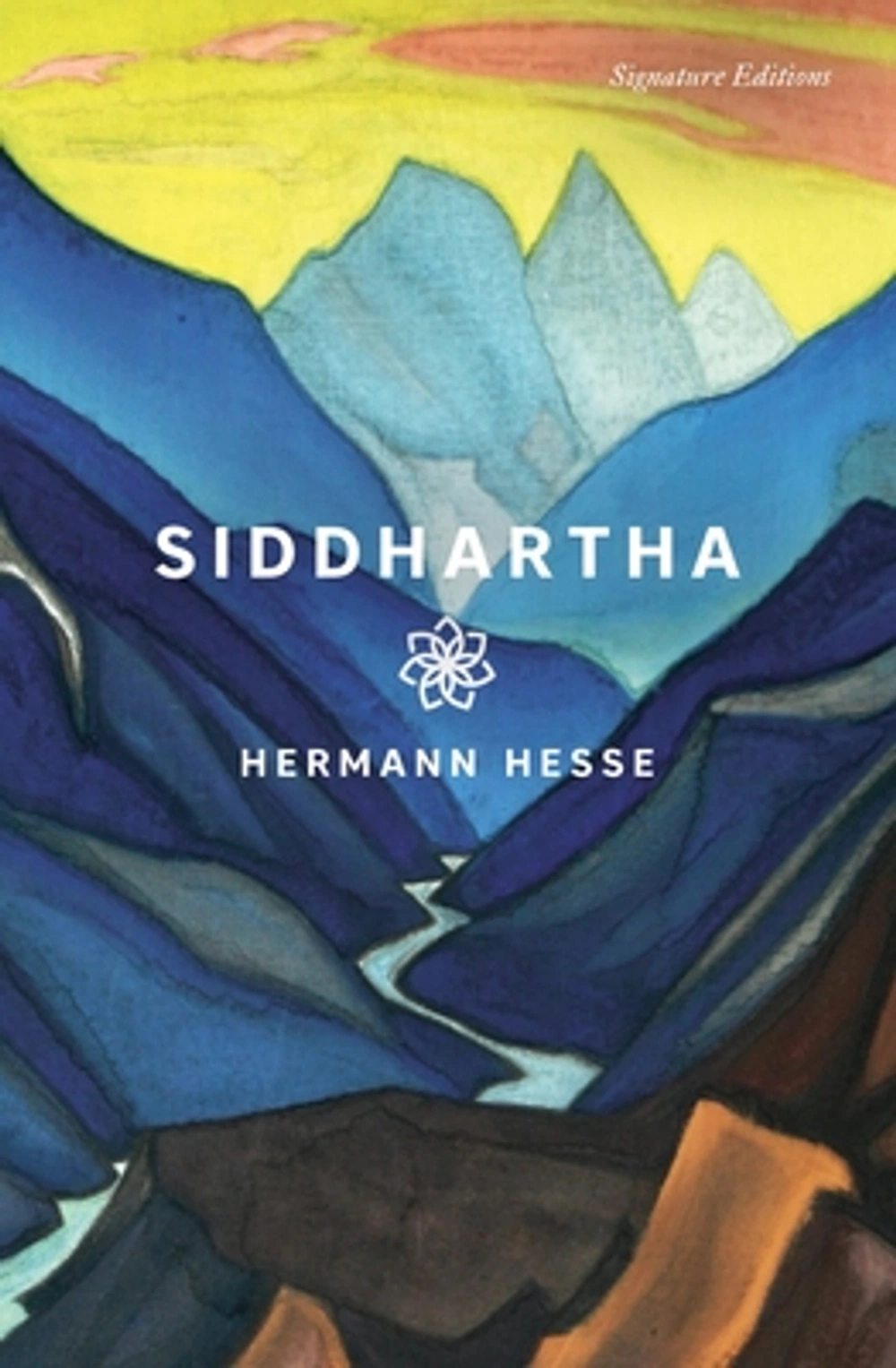
Siddhartha — Hermann Hesse
And then there's this one. My all-time favourite book. Not the most technically brilliant. Not the most surprising in terms of plot. Not even, in some ways, the most useful — its wisdom doesn't translate cleanly into bullet points or actionable takeaways.
But reading Siddhartha feels like being granted entry into something. A kind of elevated clarity where the noise drops away and what remains is very simple and very large: the river. The voice of the river. The idea that everything is already here, already whole, already enough, and that the whole of a human life might be the project of learning to hear it.
I've read it at different ages and it has been a different book each time. At twenty it was philosophy. At thirty it was grief. Now it's something closer to a compass. I don't read it for the story. I read it to remember what direction I'm supposed to be facing.
Every book on this list broke something open in me. Siddhartha showed me what was inside.
What broke you open? Find me in the newsletter — where I talk about books, writing, and whatever else is currently living rent-free in my head.
Join the Newsletter